VBT | Country Walkers has spent decades planning active travel itineraries in these regions, so the guidance here comes from experience.
By Matt Thompson, Travel Writer
Cycling, walking and hiking, cooking, wine and olive oil tasting, swimming, and archaeology. Those six things fill most Italian itineraries, and Italy does all of them unusually well. You can ride coastal roads in Puglia or vineyard hills in Chianti, walk the Path of the Gods above the Amalfi Coast or a ridge trail in the Dolomites, make pasta with someone whose grandmother taught them, taste olive oil at the mill where it was pressed that morning, swim off a Sardinian beach, and walk through a Roman city that was buried in ash and dug back out. The famous sights are worth seeing, but so is the rest of it: a lunch on a farm, a descent through orchards, a village you'd never heard of before that afternoon.
People come at this from different directions. Some have wanted to see a specific place for twenty years and build everything around it. Others start with the two weeks they can actually get away from work. Plenty start with an activity: they want to ride, or they want to walk, or they want to spend a week eating and drinking their way through one region, which is a great week by any measure.
All of those are great starting points, and none of them is better than the others.
If you're still working through the practical questions, like how long to go for and how to get around, our Italy trip planning guide covers those.
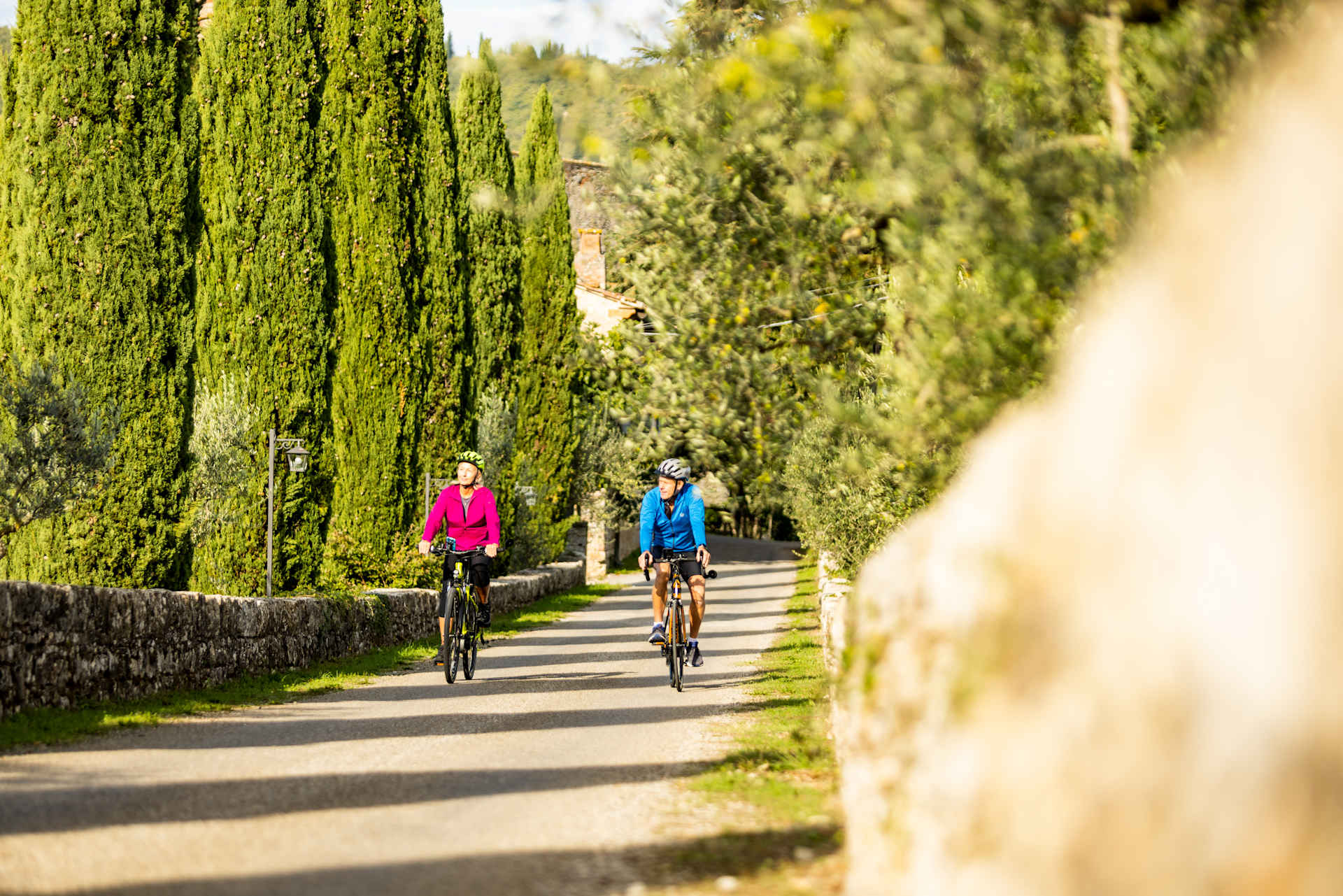
Most biking tours in Italy run from flat coastal roads to sustained mountain climbs, and each of our tour pages carries an activity rating that tells you what to expect. Many of the best trails are on quiet secondary roads, converted rail lines, and lakeside paths with little traffic.
Puglia has some of the flattest terrain in Italy, and is a good place to start if you're unsure about difficulty levels. Country roads run past olive groves that have been producing for eight centuries, through whitewashed hill towns like Ostuni and Locorotondo, and out to a coast of limestone coves. Our guided Puglia Bike Tour on the Undiscovered Coast is rated Easy and reaches Cape Otranto, the lighthouse on Italy's easternmost point. We also offer a Puglia Self-Guided Bike Tour that follows both coastlines at your own daily pace, finishes on a bike path into Lecce, and builds in a full day in Otranto where you can ride, swim, or take a boat out.
The white gravel roads of Chianti are the ones you've seen photographed: strade bianche, dust in summer, cypress on the ridgelines, and the route the L'Eroica ride made famous. Our Chianti Bike Tour is rated Moderate and works through Radda and Gaiole before dropping to the coast at Marina di Castagneto. Tuscany Bike Tour by the Sea trades some of the climbing for lagoon paths and sea air. Next door, Umbria is quieter, and we rate the Umbria Bike Tour Moderate. It links Spello, Montefalco, Bevagna, and Assisi across the Valle Umbra.
Wine country riding happens in Piedmont. The Piedmont Bike Tour crosses the Langhe and Roero hills, inscribed by UNESCO as a World Heritage property in 2014, then picks up a rail trail along the Ligurian coast. You are, quite literally, riding through a protected wine region.
Our Italy travel guide breaks the country into eight regions with the tours that are available in each.
The two islands ride very differently. Sicily rolls through the Val di Noto past carob trees and stone walls before climbing the mare-neve road on Etna's northern slopes, lava fields on one side and vineyards on the other, and our Sicily Bike Tour is rated Easy-Moderate. Sardinia has the most sustained climbing of our Italian routes, over limestone ridges and a hilly mining coast. It's also spectacular: our Self-Guided Sardinia Bike Tour, rated Moderate-Challenging, runs past sea cliffs, a cliff-carved mining tunnel at Porto Flavia, and some of the clearest water in the Mediterranean.
Dedicated bike paths turn up all over Italy, and the north has the longest stretches of them. Above Lake Iseo, the Lake Como Bike Tour rides the Vello to Toline path, cut directly into the mountainside. In the Dolomites, most days follow valley paths and old railway beds rather than the high passes, which is why Dolomites Bike Tour into Alpine Valleys and the Lake Garda & the Dolomites Bike Tour are both rated Easy despite the scenery suggesting otherwise. Our Dolomites Self-Guided Bike Tour runs roughly ninety percent on bike paths and includes the descent from Pordoi Pass: thirty-three switchbacks over six miles, on roads Fausto Coppi raced.
E-bikes are available across these trips. If you've been worried about keeping up, or about whether the climbing on a particular route is beyond you, an e-bike settles the question and opens up regions you'd otherwise rule out. Umbria and the Langhe are the obvious beneficiaries. Italy Bike Tours go deeper, and the bicycle lineup shows what you'd be riding.
A coastal path in Puglia and a ridge day in the Dolomites are both walking, and they're not the same vacation. The activity rating is the thing to check before you book.
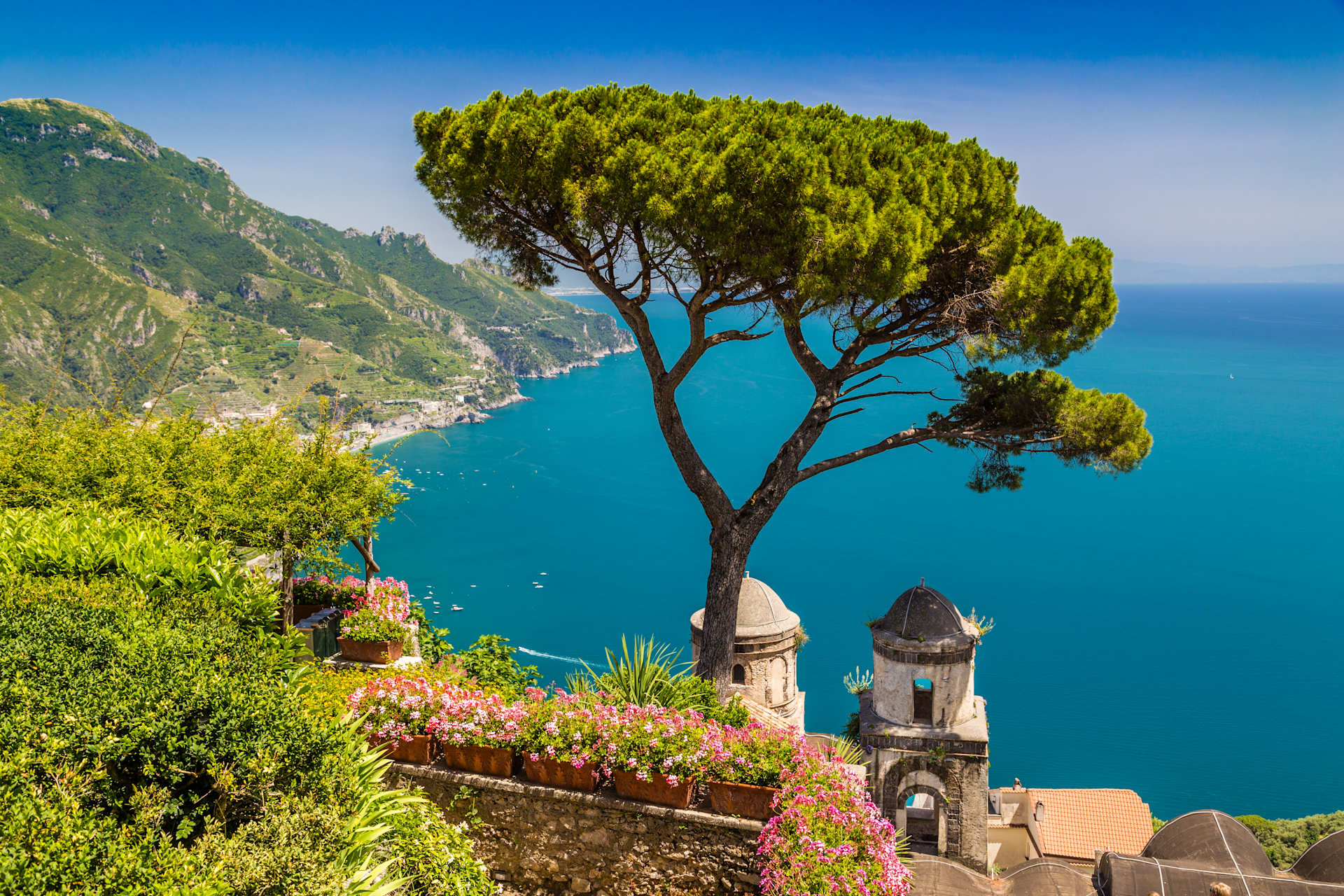
The Amalfi Coast is the walking most people picture. The Path of the Gods runs high above the water between Bomerano and Nocelle, and on a clear day you can see Capri. There's more here than that one trail: old mule paths connect Ravello to Minori through terraced lemon groves, and the Sorrento Peninsula has a network of its own. Our Amalfi Coast Walking Tour covers all of it, and is rated Moderate-Challenging. Amalfi's terrain is steep, and there are a lot of staircases, which is also why it's the one region here that doesn't work on a bike.
The Dolomites are the high country. Cable cars and gondolas do the first part of the climbing, and from there the trails run along ridgelines with the limestone towers in full view. Our Dolomites Walking Tour is also rated Moderate-Challenging and takes in the Seceda ridge above Val Gardena, the loop around Sass de Pütia, and the circuit of the Tre Cime di Lavaredo. Lunch happens at a rifugio, one of the mountain huts that make a long day up here feel considerably more civilized.
You'll run into via ferrata in any Dolomites research you do. These are the cabled climbing routes fixed to the rock, and this range has the greatest concentration of them anywhere. Most were built or expanded during the First World War, when the front line between Italian and Austro-Hungarian troops ran straight through these mountains and cables were the only practical way to move men and supplies through the high country. Climbers reclaimed them from the 1930s onward. They're a specialist pursuit that calls for proper climbing equipment and training, and they aren't part of any VBT | Country Walkers itinerary. The war does turn up on the walking route: between Passo Giau and Cinque Torri you pass bunkers and tunnels that soldiers cut into the mountainside, and your Trip Leader will tell you what happened on that ground.
Tuscany and Umbria are the gentler middle. Our Tuscany Walking Tour crosses the Val d'Orcia on foot from Torrenieri to Pienza, climbs through vineyards to the Romanesque Abbey of Sant'Antimo, and takes on Monte Subasio above Assisi. Rated Easy-Moderate.
Fewer people know about the walking in Puglia and Sicily, which is most of its appeal. Our Puglia Walking Tour starts in the ravines of Murgia Materana Park outside Matera and works down the Salento coast past sea stacks, watchtowers, and a red bauxite lake, including a stretch of the Via Francigena, the medieval pilgrim route to Rome. On the Sicily Walking Tour you walk Etna's slopes over hardened lava flows, then the Cava della Misericordia gorge and the coastal wetlands of the Vendicari reserve. Both are rated Easy-Moderate.
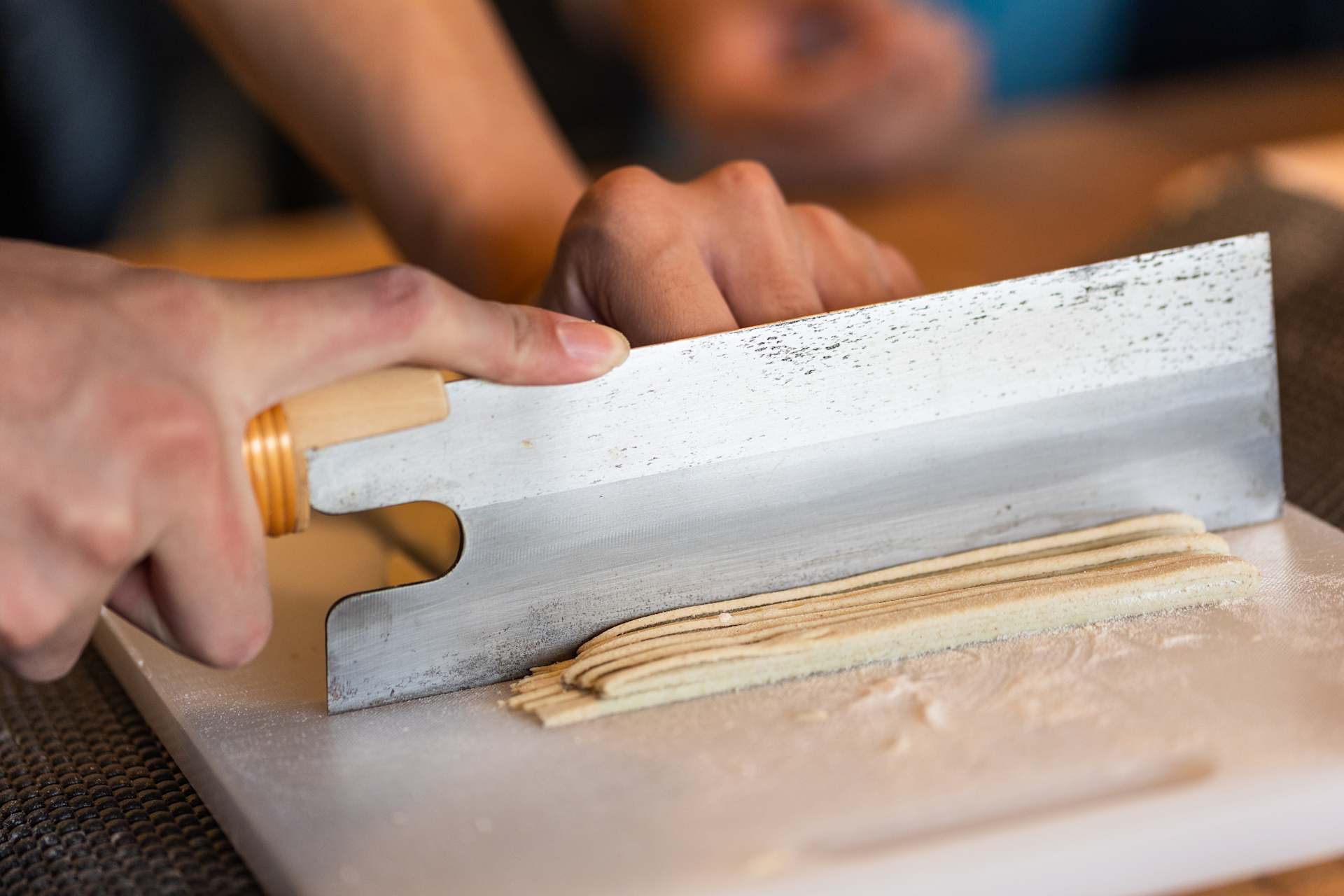
Eating well in Italy takes no planning at all. Learning something while you eat takes a little more.
Hands-on cooking turns up on a handful of these trips, and what you make depends on where you are. In southern Tuscany you might be making gnocchi with a local chef. In Chianti you'll cook a traditional Tuscan meal in the home of a longtime friend of the company and eat it together with your group, learning about the region from the person whose table you're sitting at. In Umbria the lesson is often focaccia, at a family agriturismo in Le Marche. In Liguria it's pesto, after a walk through the Sanremo market with a local who knows every vendor by name. And on the Sorrento Peninsula, the Amalfi trip includes a farm visit and a cooking session before the farewell dinner.
Umbria also has two home-hosted lunches, which is the thing worth traveling for. You eat at a family's table, at their pace, with what they grew.
Farm and producer visits are the other half of this. The Sicily bike route includes a garden-to-table lunch with the cook who grew most of it and a tasting at an organic honey farm. In the Brenta Dolomites there's a cheese tasting at a family farm and a chalet lunch in the mountains. Carloforte, on a small island off Sardinia, serves some of the freshest tuna anywhere, on a stretch of coast where the fishermen still speak a Ligurian dialect brought over centuries ago.
Regional cooking in Italy stays regional, which is the practical argument for eating where you are. Casoncelli and pizzoccheri around the lakes. Speck and alpine cheese in South Tyrol. Cross a mountain range and the same dish has a different name and a different filling.
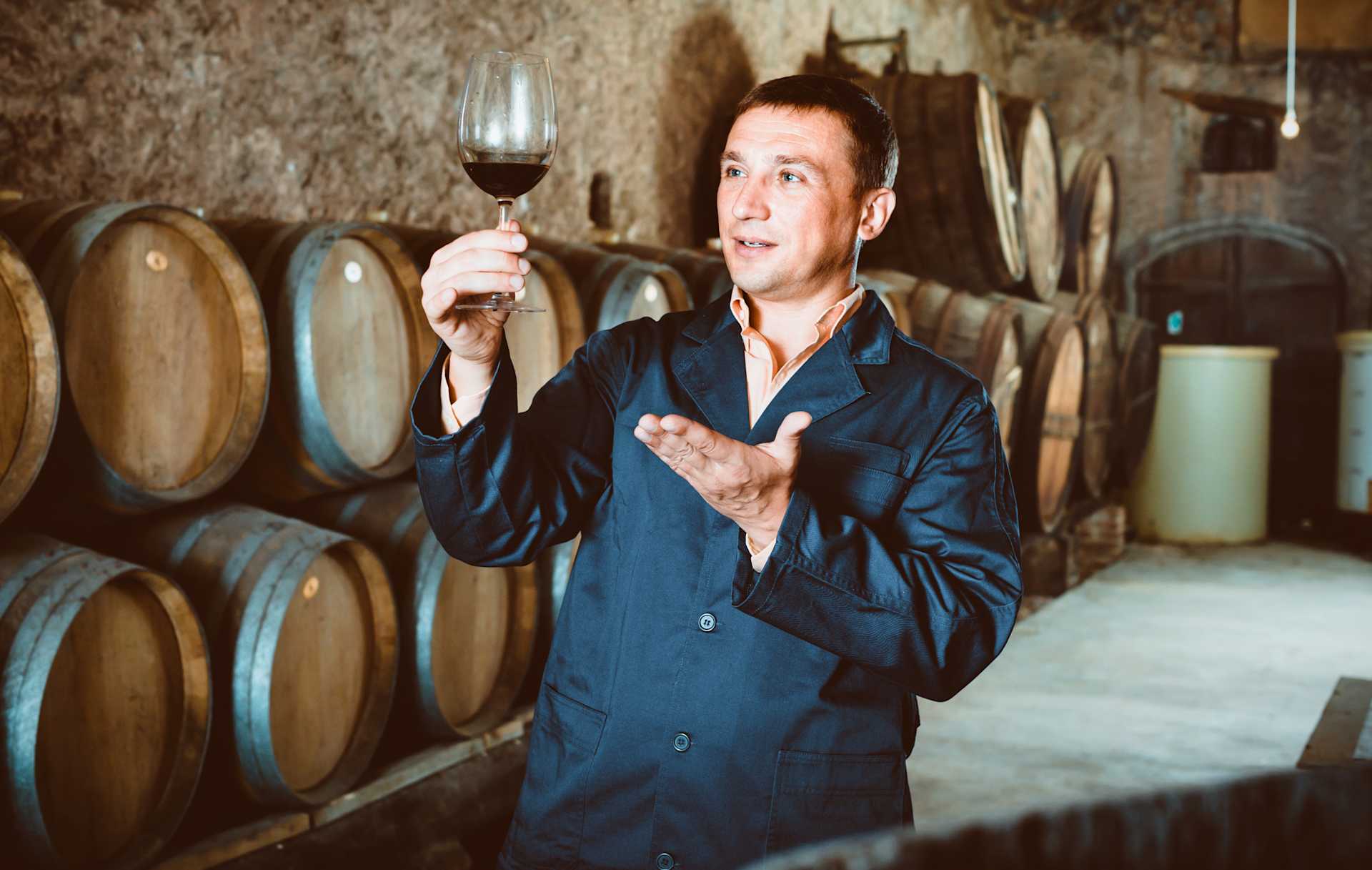
Sangiovese, Nebbiolo, Gewürztraminer, Nerello. The grape changes every hundred miles or so in Italy, and tasting a wine where it grows is a different experience from tasting it anywhere else.
In Piedmont, Nebbiolo becomes Barolo and Barbaresco. Our Piedmont Bike Tour visits the cellars at Tenuta di Fontanafredda, an estate founded by a king and renowned for its underground cellar, named one of the 100 most beautiful in the world. In Tuscany, Sangiovese is the grape and the tastings come with context: a guided visit to the 13th-century Castello di Meleto and its vineyards on the Chianti Bike Tour, or a Montalcino producer on the Tuscany Walking Tour.
Sicily's Etna wines grow in volcanic soil at altitude, and the Sicily Bike Tour closes with a tasting at a historic family winery. Up north, our Lake Como Bike Tour rides into Franciacorta, where the sparkling wines are made by the traditional method, and the Lake Garda & the Dolomites Bike Tour stops for Gewürztraminer in the hamlet that gave the grape its name. Down south, the Puglia Walking Tour ends its coastal days with a sommelier-led tasting above the estate's own vines.
Olive oil deserves the same attention and rarely gets it. Fresh oil tastes green and peppery and catches at the back of your throat, and if it doesn't, it isn't fresh. You can taste it at the mill on several of these trips: at Il Frantoio in Puglia, at the family-owned Fonte di Foiano press in Tuscany, at a historic mill in Umbria, at a masseria outside Ostuni, in the Ligurian village of Dolcedo, and at a mill on the shore of Lake Iseo.
Truffle hunting happens on one trip only, and it's Piedmont. In the Roero hills you go out with a trifolao and his dog and watch the dog do the work. Truffles aren't found by people. They're found by an animal that has been trained for years and rewarded with treats, and watching the search unfold in the woods beats any plate you'll be served afterward.
Autumn brings the vendemmia, the grape harvest, and the pressing of olio nuovo, the new oil. If harvest timing is what you're planning around, Best Time to Visit Italy gets specific about it.
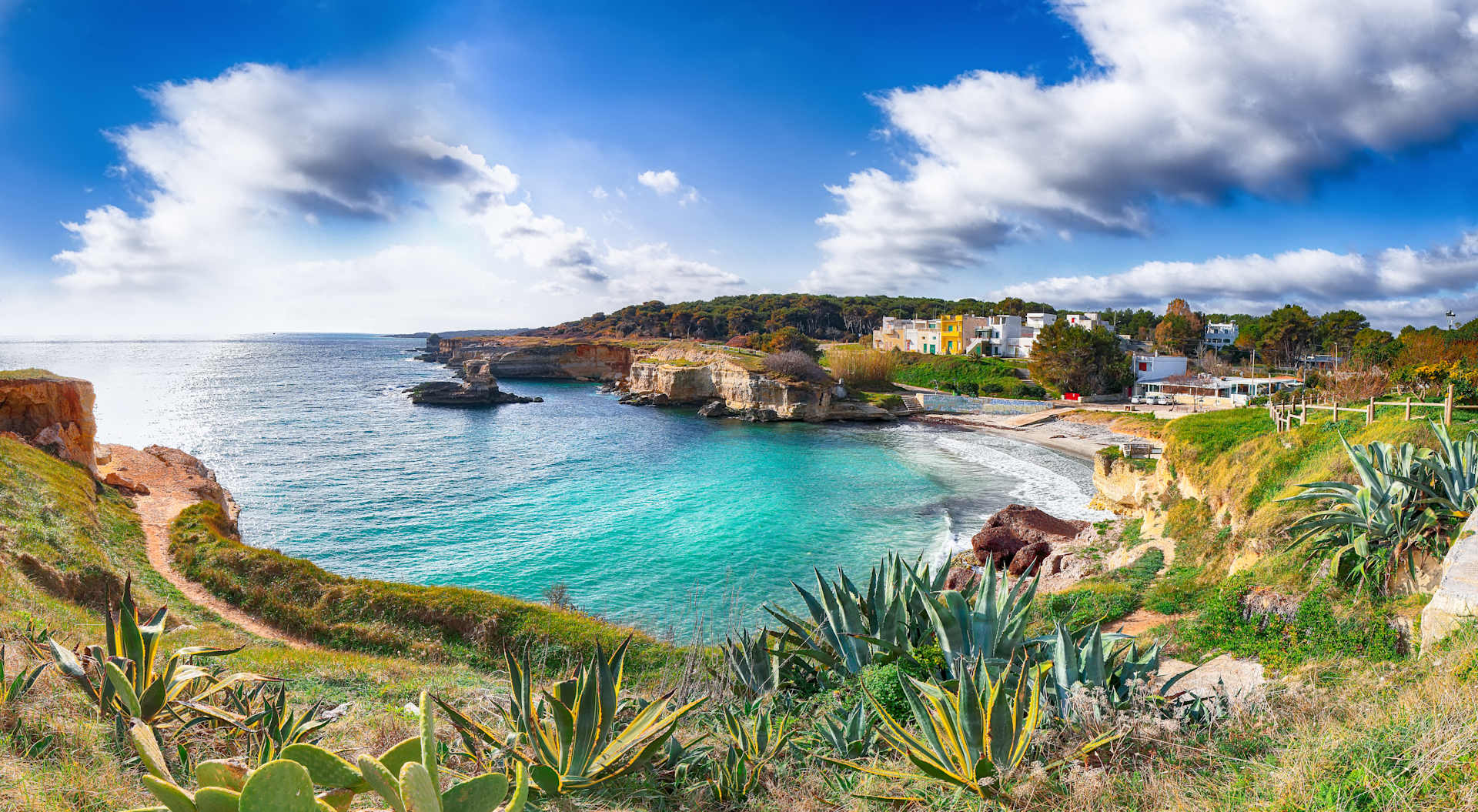
Swimming is easy to arrange in many regions of Italy, and the water is warm from late spring into autumn. It's also clearer than most first-time visitors expect.
One thing to understand before you go. Italian beaches divide into two kinds. The stabilimenti balneari, also called lidi or bagni, are private beach clubs that hold a concession from the state and charge a daily fee for an umbrella, two loungers, showers, changing rooms, and a lifeguard. The spiagge libere are free public stretches where you bring your own towel and there's usually nothing else. Every beach in Italy sits on public land and has to provide free access somewhere, and the battigia, the water's edge and the first few feet of sand, stays open to everyone. Free sections tend to be narrower and busier, so an afternoon at a stabilimento is often worth the twenty euros.
Where to actually get in: Puglia has coves under limestone cliffs on both coasts, and the guided trip includes a swim at Otranto. Sardinia is hard to beat, with swims at Porto Pino Bay and the beaches at Chia, plus the tallest sand dunes in Europe near Torre dei Corsari. Sicily puts a picnic and a swim at Sampieri in the middle of a riding day. In southern Tuscany, Giglio Island is a full day of harbor, hill village, and Tyrrhenian water. And in the north, Lake Caldaro is shallow enough to warm up properly, which is not true of most Alpine lakes.
Boats matter too. A hydrofoil to Capri on the Amalfi trip, a private boat to the car-free island of Monte Isola on Lake Como, ferries between Sardinia and San Pietro.
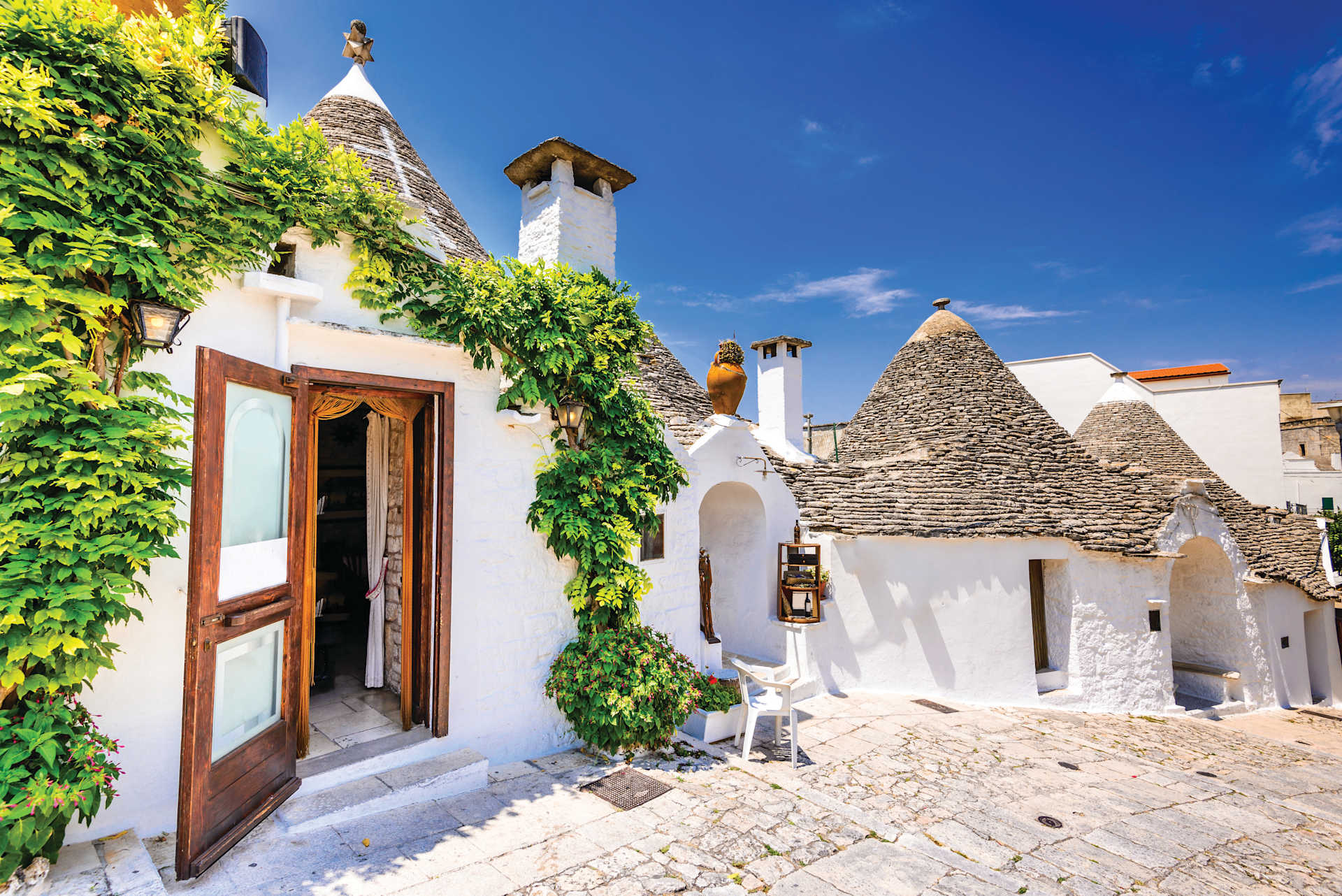
No country has more UNESCO World Heritage sites than Italy, and a surprising number of them sit exactly where you'd be walking or riding anyway.
Pompeii lives up to it. Not the scale, though the scale is startling, but the ordinary detail: ruts worn into the paving by cart wheels, a counter with holes where the jars of food sat. Our Amalfi Coast Walking Tour starts there.
In Sicily, Syracuse has a Greek theater still cut into the hillside and an archaeological park you can spend a morning in, and just inland the Necropolis of Pantalica holds thousands of tombs carved into cliff faces. The Baroque towns of the Val di Noto, including Scicli and Noto, were rebuilt in honey-colored stone after a 1693 earthquake flattened the region, and they're inscribed as a group.
In Puglia, Matera's sassi are cave dwellings occupied continuously for millennia, and Alberobello's trulli are conical stone houses built without mortar. Lecce is called the Florence of the South for its Baroque carving. On the coast, Egnatia is a Greek and Roman port site you ride straight past.
Four separate inscriptions sit within a single week's walking in Tuscany and Umbria: Siena, Pienza, the Val d'Orcia, and Assisi, where Giotto's twenty-eight-panel fresco cycle covers the walls of the Basilica of St. Francis.
In the north, Bolzano's archaeology museum holds Ötzi, the 5,000-year-old man found in a glacier in 1991. Valcamonica, near Lake Iseo, has one of the largest collections of prehistoric rock carvings in the world.
Rome, Florence, and Venice sit outside all of this, and they're the reason the arrival and departure days matter. Florence works as a landing before Chianti, Venice before the Dolomites, Verona after them, and Rome after Sicily. Extra Experiences exist for exactly this: they extend a trip at either end with hotel nights and guided time, so a city you'd otherwise see through a taxi window becomes two or three real days. If there's a museum, a neighborhood, or a meal you've been meaning to get to, that's where it goes.
A quick cross-reference table, activity by activity.


Over 98% of guests tell us they plan to travel with VBT | Country Walkers again.