All twenty of Italy's regions, north to south, and what each one is actually like.
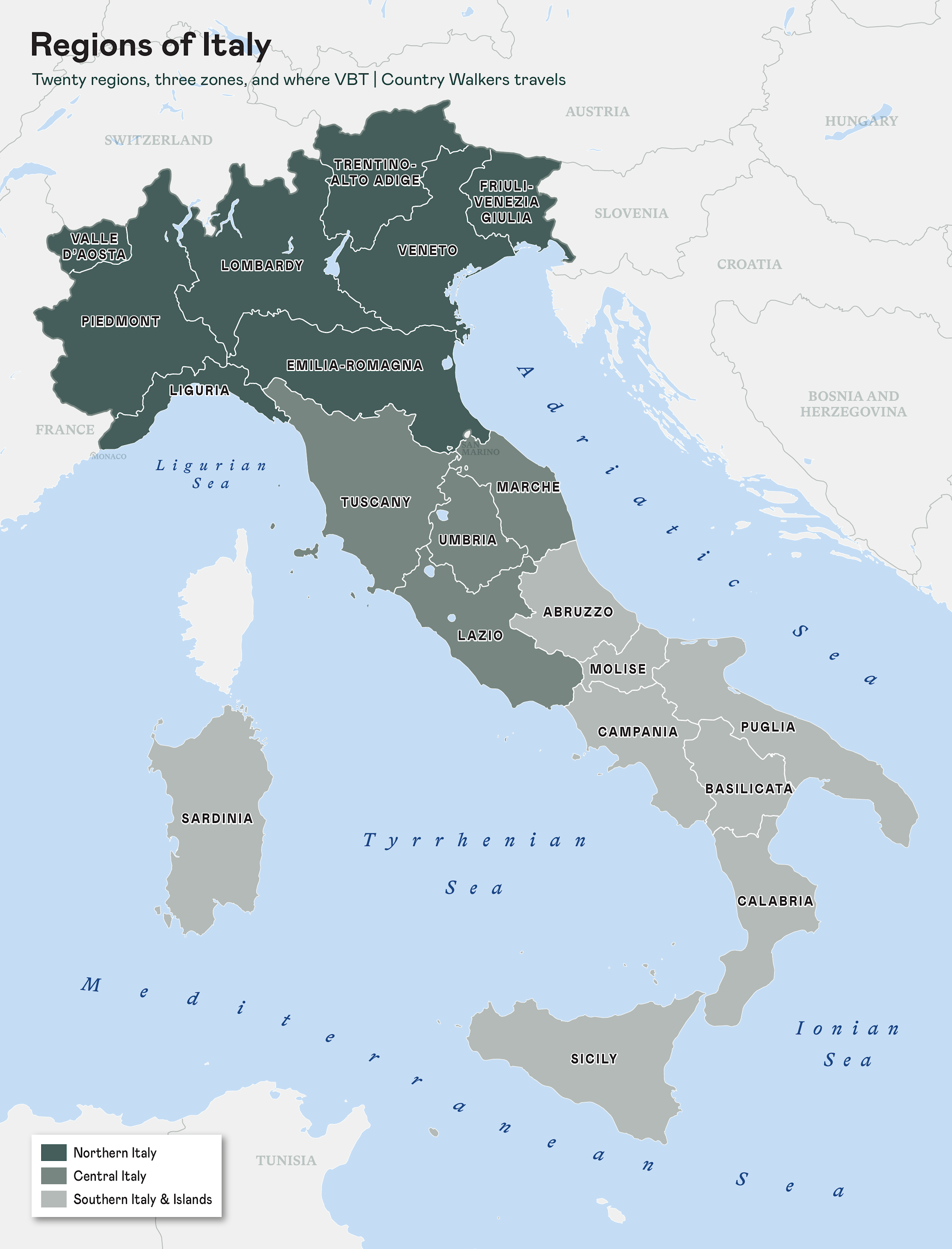
Italy is divided into twenty regions, five of which hold special autonomous status for historical and linguistic reasons. It helps to think about these regions in three broad zones. The north runs from the Alps down to the Po valley and takes in Valle d'Aosta, Piedmont, Liguria, Lombardy, Trentino-Alto Adige, Veneto, Friuli Venezia Giulia and Emilia-Romagna. Central Italy covers Tuscany, Umbria, Marche and Lazio, roughly the middle third of the peninsula on both coasts. The south and the islands take in Abruzzo, Molise, Campania, Puglia, Basilicata, Calabria, Sicily and Sardinia. The borders are administrative rather than cultural, and they don't always match how Italians talk about their own country, but they're the lines that many maps use and a reliable place to start.
Italy's regions reflect territories shaped by the kingdoms, duchies and papal states that preceded unification in the nineteenth century, and the present regional system was set out in the 1948 Constitution. That history is why a region is still a real unit rather than a line on paper. Dialect changes across a regional border, and so do bread, cheese, the shape of the pasta and the grapes used to make the wine.
For a traveler the practical differences run north to south. The north is mountainous at the top and flat through the middle, cooler and wealthier, and closer in food and habit to Austria and France, with butter and rice where the rest of the country uses olive oil and durum wheat. Central Italy is the hill country most people picture when they picture Italy: vineyards, ridge-top stone towns, and the art cities. The south is hotter and drier, with a longer growing season, a Greek and Arab inheritance in its buildings and its cooking, and coastline on nearly every side.
None of that tells you where to go on its own. What it does is narrow the field, because a week on the high trails of the Dolomites and a week of flat coastal riding in Puglia are different countries in everything but the passport.
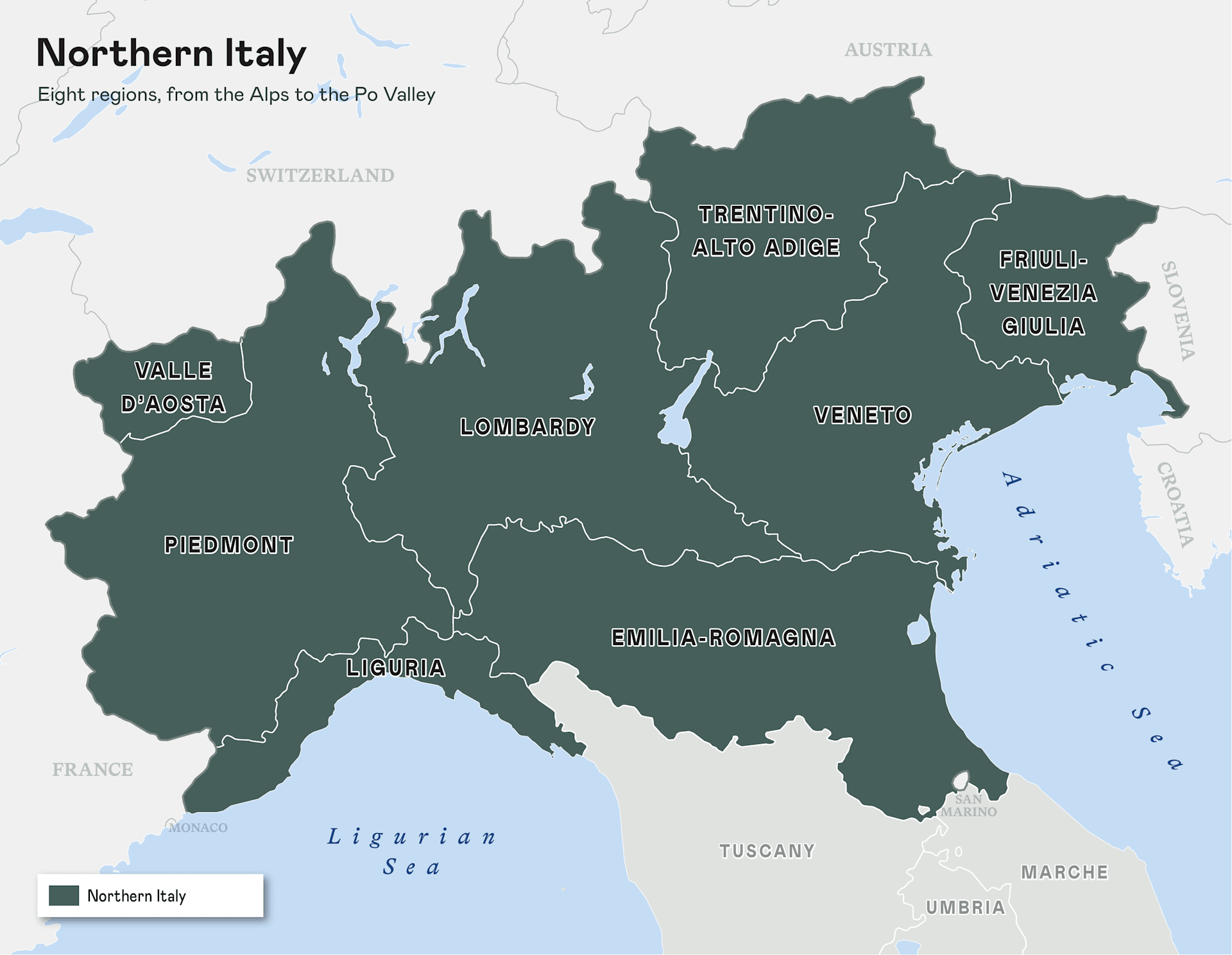
Consisting of eight regions, with the Alps forming much of Italy's northern boundary and the Po plain spreading across the center, this is generally considered the wealthiest part of the country and the most industrial. That may surprise you if you're arriving expecting only mountains and lakes. The weather has real seasons: cold winters, hot humid summers on the plain, and long comfortable stretches in late spring and early autumn.
The smallest region, wedged between France and Switzerland with Mont Blanc and the Matterhorn on its borders. The French language holds official status here alongside Italian, and you'll hear both. Aosta features a Roman arch and theatre from when the valley was a route through the Alps, and a chain of castles guards the road east. The food is alpine: Fontina, polenta, cured beef, and a shared wooden cup of coffee laced with grappa. Summer opens the high trails and winter belongs to the many ski resorts.
Piedmont fills the northwestern corner, wrapped on two sides by the Alps, with Turin at its center. Turin is one of the most underrated of Italy's big cities, with arcaded streets built for the Savoy court, historic cafés that take chocolate seriously, and one of the largest Egyptian collections outside Cairo.
South of the city the ground rises into the Langhe, Roero and Monferrato hills, which carry a UNESCO listing for the vineyards themselves. Nebbiolo grown here becomes Barolo in one set of villages and Barbaresco in another a few miles away, and the difference between them is a subject people like to argue about over a long lunch. Barbera and Dolcetto are the wines more likely to turn up with dinner. Alba holds its white truffle market in autumn, which is the busiest time to be here and, for a lot of travelers, the best. Hazelnut groves fill the slopes where the vines don't grow well. East of the hills the flat land around Vercelli grows rice, which is why the north eats risotto where the south eats pasta.
Late spring and autumn are the comfortable months for active travel. Our Piedmont Bike Tour through Langhe & the Riviera rides the wine hills before dropping to the Ligurian coast.
A thin crescent of coast running from the French border to Tuscany, with mountains pressed close behind it and almost no flat ground anywhere. Genoa is the working heart of it, a dense port city with one of the largest medieval centers in Europe. East of there the coast turns into Portofino, the Cinque Terre and a string of towns stacked up cliffs, most of them easier to reach by train than by car. Pesto was invented here, and the terraced vineyards above the sea make crisp whites that rarely leave the region. Spring and autumn are the sensible months, since July and August fill the villages past comfort.
Lombardy is Italy's economic engine and its most populous region, with Milan in the middle and the lakes strung along the top. Milan really requires a couple of days for the cathedral, the Last Supper, and a design and food scene that moves faster than most of the country.
The lakes are why most travelers come. Como is the famous one, shaped like an upside-down Y with Bellagio on the promontory where the arms meet, and with ferries between the shore towns to help you get around. Maggiore has its island gardens, Iseo stays quieter, and Garda straddles the border with Veneto and Trentino. Away from the water, Bergamo's walled upper town sits above the modern city, Mantua keeps its Gonzaga palaces, and the Franciacorta hills make Italy's best-known traditional-method sparkling wine. The kitchen leans north: risotto alla milanese, ossobuco, panettone at Christmas, and cooking done in butter more often than in olive oil, which is the reverse of what you'll find further south.
The lake season runs from late spring into early autumn. Our Lake Como Bike Tour in the Lake District explores the shoreline and the villages above it.
Two provinces in one region, and they don't feel the same. Trentino, around Trento, is Italian-speaking. Alto Adige, around Bolzano, is South Tyrol: it belonged to Austria until 1919, German is the first language of most residents, and in the Val Gardena and Val Badia you'll hear Ladin as well, which is older than either.
The Dolomites run through both, and their pale limestone towers carry a UNESCO listing. They turn pink at sunset, which is a real optical effect rather than a brochure line. Below the peaks the valleys fill with apple orchards and vineyards, and the cooking is Austrian more than Italian: speck, canederli dumplings, goulash, strudel. The wines deserve attention on their own, particularly Lagrein and the Gewürztraminer that takes its name from the village of Tramin. Bolzano's archaeology museum holds Otzi, the prehistoric body found in a melting glacier. In December the Christmas markets fill the town squares.
High summer is the season for the trails, while the valley floors are great from late spring to mid-autumn. Our Dolomites Bike Tour into Alpine Valleys follows the valley bike paths and old rail beds rather than the climbs the peaks suggest.
If you'd rather be up on the high trails than below them, The Dolomites Walking Tour goes there on foot.
Venice anchors the region, and everything said about it is true, crowds included. The rest of Veneto sees a fraction of those visitors and deserves more of them. Verona's Roman arena still stages opera in summer, Padua holds Giotto frescoes that predate the Renaissance, and Vicenza is close to an open-air catalogue of Palladio's villas. North of Treviso the Prosecco hills are steep enough that the vines are worked by hand. Eating here means cicchetti in Venetian bars, risotto with Treviso radicchio, and Amarone from the Valpolicella hills.
The northeastern corner, bordering Austria and Slovenia, and one of the five autonomous regions. Trieste is the draw, a Habsburg port city of grand coffee houses that reads more central European than Italian. Inland, the Collio hills make some of Italy's finest white wines, Friulano and Ribolla Gialla among them, and San Daniele cures a prosciutto that rivals Parma's. The terrain runs from Alpine peaks to Adriatic lagoon in about sixty miles.
If you came to Italy to eat, this is the region. Parmigiano Reggiano, prosciutto di Parma, traditional balsamic from Modena and the ragù that Bologna serves on tagliatelle rather than spaghetti all come from within a short drive of each other. Bologna sits at the center, a university town of long porticoes with a food market worth planning a day around, and Ravenna holds sixth-century Byzantine mosaics that are among the finest anywhere. Ferrari, Lamborghini and Ducati are built here too. The Po plain is flat and easy ground to cover, though summers are humid, so spring and autumn are the months to choose.
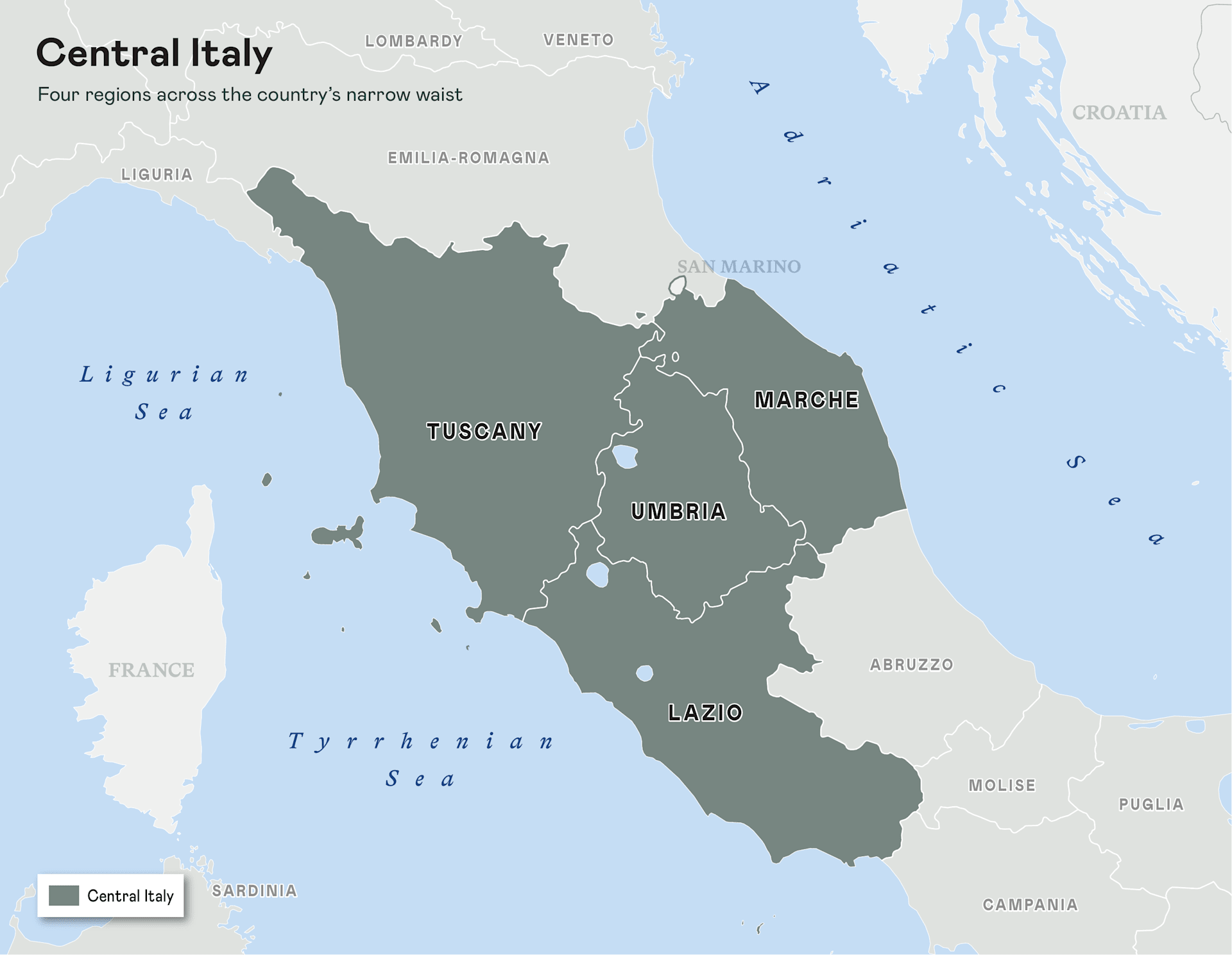
Four regions across the middle of the peninsula, coast to coast. This is hill country, with the Apennines running down the spine, vineyards and olive groves on both sides, and a stone town on every high point. The season is generous: April through June and September through October are close to ideal, and even winter stays workable in the cities.
This is the region everyone pictures, and it lives up to the picture, but it's larger and more varied than the postcard suggests. Florence holds the Renaissance inside one walkable center. Siena's Gothic core wraps around a shell-shaped square. Pisa and Lucca sit farther west, one with the tower and one with intact Renaissance walls you can walk (or bike!) the full circuit of.
When you travel outside the cities, you'll notice the country changes every half hour. Chianti, between Florence and Siena, is steeper than its reputation, all ridge roads and Sangiovese. South of there the Val d'Orcia is the cypress-and-farmhouse country that carries a UNESCO listing, with Montalcino and Montepulciano making the region's most serious wines. West is the Maremma, flatter and closer to the sea, with beaches, hot springs and a fraction of the visitors. Tuscan cooking is plainer than its reputation as well: bread soups, white beans, grilled steak, and olive oil pressed in November that tastes green and peppery for about a month afterward.
April to June and September to October are the months. Our Chianti Bike Tour in Tuscany's Wine Region covers the wine roads, and other trips follow the coast and cross into Umbria on foot.
Landlocked, greener than Tuscany, and quieter in a way people either love or find slow (we love it). Assisi is the anchor, with Giotto's frescoes in the basilica and a hillside position that catches evening light across the whole plain. Perugia is the lively university city, Orvieto has a cathedral facade worth the trip on its own, and Spoleto, Gubbio and Todi are the sort of towns you find on the way somewhere else and stay in longer than planned.
The food is earthy: black truffles from Norcia, lentils from the Castelluccio plain, wild boar, and Sagrantino from Montefalco, a dense tannic red wine grown almost nowhere else. From late spring into early summer, the Castelluccio plain flowers in waves of red, yellow and purple.
Here as well, spring and autumn are the best times to visit, with summer manageable at altitude. Our Umbria Bike Tour through Italy's Green Heart links Spello, Montefalco and Assisi.
Tucked behind Umbria on the Adriatic side, and consistently overlooked. Urbino's ducal palace is one of the great Renaissance buildings and the town carries a UNESCO listing. The Conero peninsula brings a rare run of dramatic cliffs to the Adriatic coast, and the Sibillini mountains behind it offer serious walking. Verdicchio is the white wine to order, and olive all'ascolana, stuffed and fried olives, are the local snack worth going out of your way for.
Rome dominates, and on a first trip to Italy it's often the whole visit: the Forum, Vatican City, and a food culture built on a handful of pasta dishes made properly. Beyond the city, the region has more than its reputation suggests. Ostia Antica is a Roman port town nearly as complete as Pompeii and far quieter, Tivoli holds Hadrian's villa and the water gardens at Villa d'Este, and the Etruscan tombs at Cerveteri and Tarquinia reach back to Rome's earliest centuries, preserving a civilization that shaped it. The Castelli Romani hills south of the city are where Romans go on Sundays for white wine and porchetta. Summer in the city is hot and busy, so spring and autumn are much better.
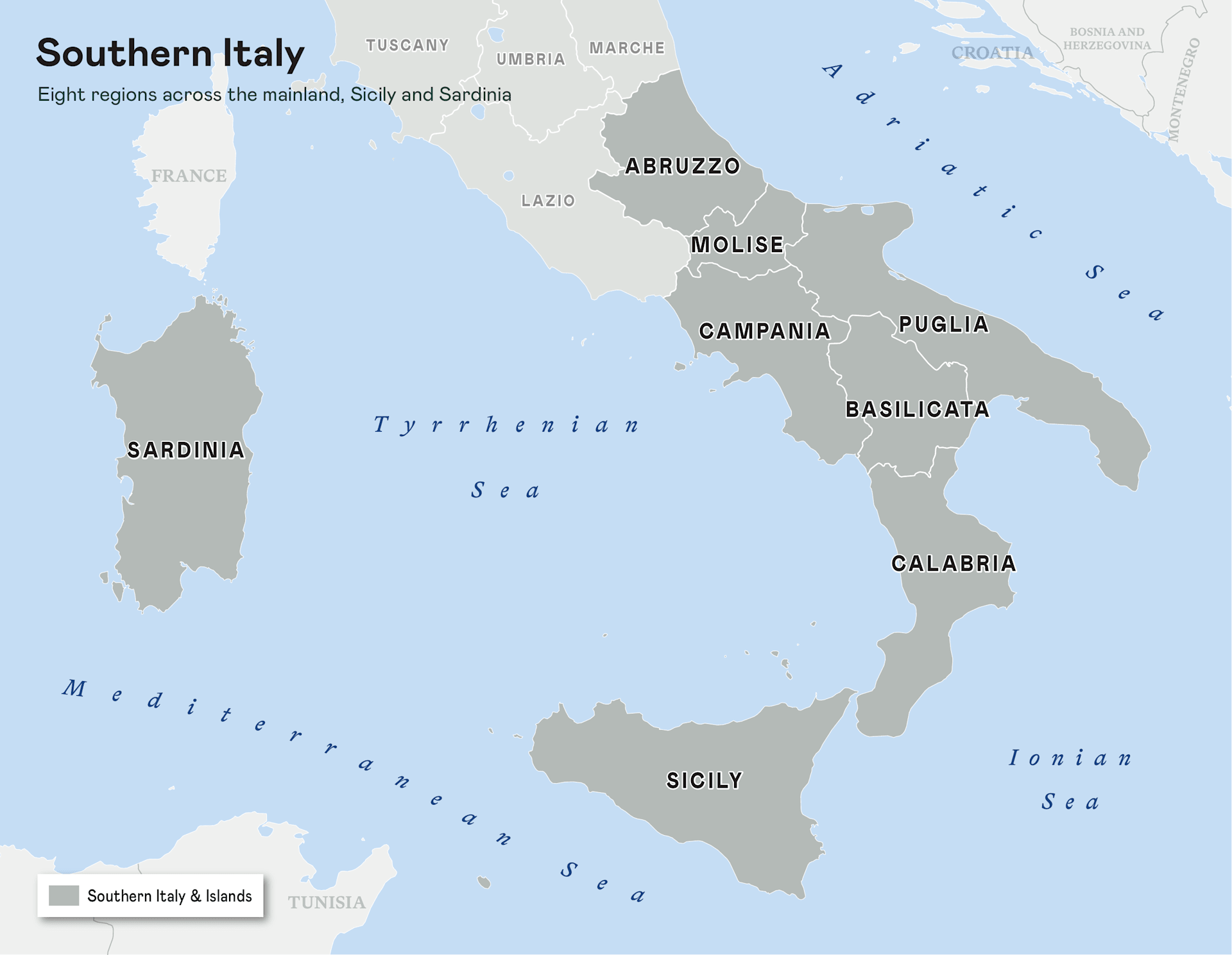
The change from central Italy as you pass into these eight regions is immediate. You'll notice the light is harder, the growing season longer, the coastline nearly continuous, and the Greek and Arab influence visible in temples, street plans and what you'll have for dinner. Prices drop, distances feel longer, and the pace shifts. Spring and autumn are the comfortable seasons across all of it. August is when Italians take their own holidays, so towns fill and coastal roads slow to a crawl.
Mountains first, coast second. Gran Sasso and Majella national parks cover a large share of the region and still hold wolves and brown bears, and the hill villages sit high enough to keep their winters real. The Trabocchi coast east of them takes its name from the wooden fishing platforms built out over the water, several of which now serve dinner. Montepulciano d'Abruzzo is the everyday red, and arrosticini, mutton skewers grilled over a long narrow brazier, are what most locals eat outdoors in summer.
Molise is the region most travelers skip, and even plenty of Italians have never been. It deserves better than that. Ancient sheep-droving routes called tratturi cross it, wide grass roads that carried flocks between the mountains and Puglia since Roman times and now make excellent walking. There's a Samnite theatre at Pietrabbondante, a quiet Adriatic coast around Termoli, and villages where nobody is trying to sell you anything.
Naples is loud, dense and one of the great food cities in Europe... and pizza as the world knows it started there. Around it sits an unusual concentration of things worth seeing: Pompeii and Herculaneum under the shadow of Vesuvius, the Greek temples at Paestum, and the islands of Capri, Ischia and Procida offshore.
The Amalfi Coast is the region's most famous stretch, a shelf of hairpins with villages stacked above it and lemon terraces held up by drystone walls. Positano and Ravello are the names people know, though the mule paths and stone staircases that linked the villages before the road existed are the better way to see it, and the Path of the Gods along the ridge is the best known of them. Buffalo mozzarella comes from the plain south of Naples, made the same morning it's eaten. The wines to look for are Aglianico from Taurasi and the whites Falanghina and Fiano.
Spring and autumn beat summer here comfortably, on the coast road and on the trails alike. Our Amalfi Coast Walking Tour takes the high paths, reaches Capri by boat, and stops at Pompeii on the way through.
The heel of the boot, with the Adriatic on one side and the Ionian Sea on the other and very little of it steep. The building styles are specific to here: trulli, the conical drystone huts that cluster thickest around Alberobello, and masserie, fortified farmhouses that once protected livestock behind their own walls and now mostly work as hotels. Ostuni is white, dazzlingly so, and sits on a ridge above the olive groves. Lecce's Baroque was carved rather than cast, because the local limestone comes out of the ground soft enough to cut.
Olive groves cover much of the region, and some of the trees are old enough to be under legal protection. The kitchen is vegetable-led and unfussy: orecchiette with turnip tops, burrata from Andria, fava purée, and plenty of raw seafood on the coast. Primitivo and Negroamaro are the reds. The Salento peninsula at the very bottom has some of the clearest water in the country.
April through June and September into October are the months to travel. Our Puglia Bike Tour on the Undiscovered Coast covers the coast and the trulli country, with self-guided and walking versions of the region as well.
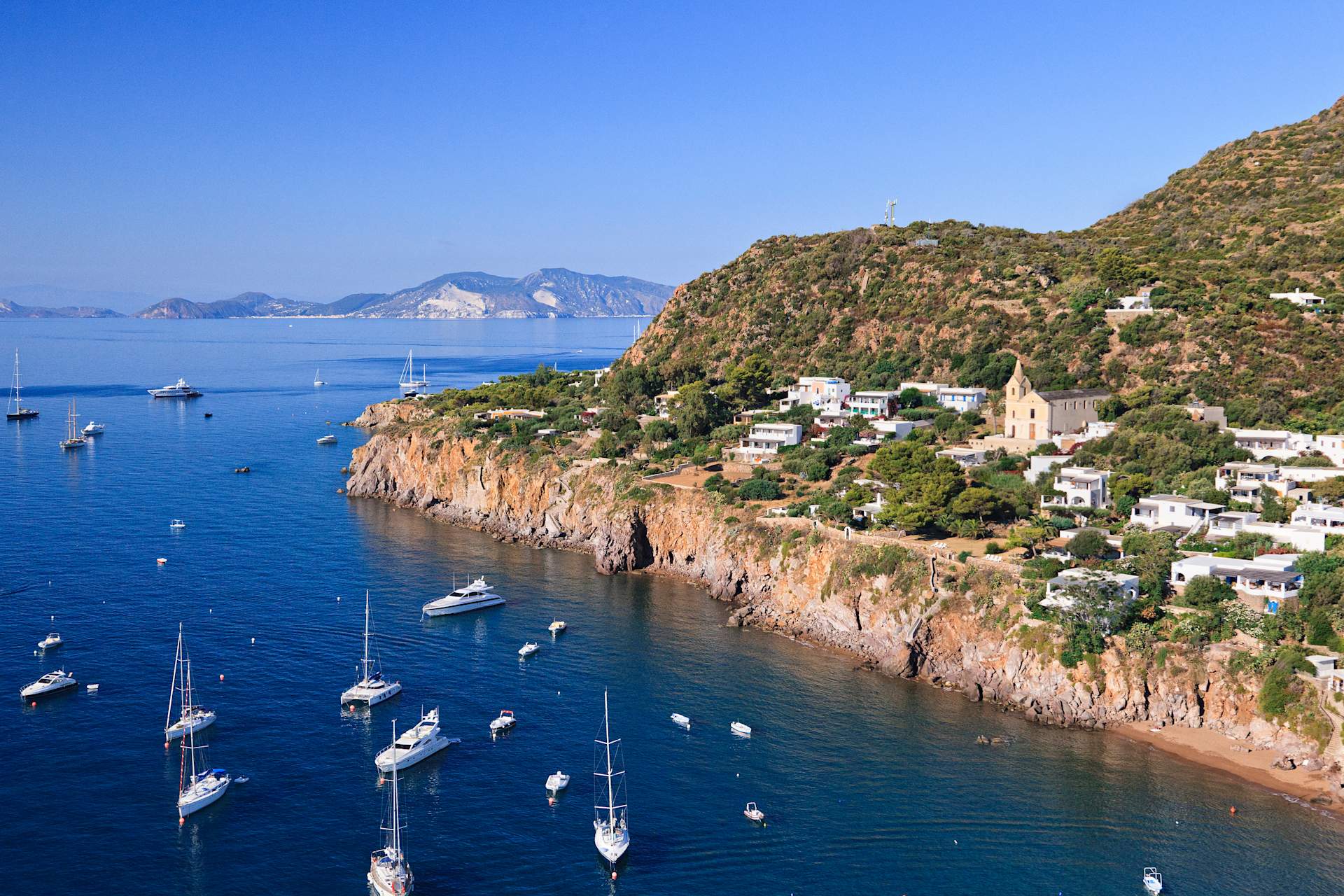
Small, mountainous and mostly empty, sitting in the arch of the boot with short coastlines on both seas. Matera is why most people come: a town of sassi, dwellings cut into a limestone ravine and lived in continuously for thousands of years until the residents were relocated in the 1950s. It carries a UNESCO listing now, with cave churches, rock-cut frescoes and hotel rooms carved into the same stone. Elsewhere, Maratea gives the Tyrrhenian coast a cliffside town with no crowds, and the Pollino mountains inland make up one of the largest national parks in the country. Aglianico del Vulture, grown on volcanic soil, is one of southern Italy's best reds.
Our Puglia Walking Tour crosses the regional border to reach Matera on foot.
The toe, and one of the least developed parts of mainland Italy. The interior is mountain: the Sila plateau with its pine forests and lakes, and the Aspromonte massif at the tip. The coast alternates between long empty beaches and towns like Tropea, perched on a cliff above water that looks Caribbean. Reggio Calabria's museum holds the Riace bronzes, two Greek warrior statues pulled from the sea in 1972. The food is spicy by Italian standards, built around 'nduja and Tropea's red onions, and in a few villages you can still hear a Greek dialect left over from Byzantine rule.
The largest island in the Mediterranean, and it can feel more like a country of its own than a region of one. Greeks, Romans, Arabs, Normans and Spaniards all governed it, and each left buildings still standing. The Greek temples at Agrigento and Segesta are better preserved than most in Greece, and Palermo's Arab-Norman churches and street markets are unlike anything on the mainland. The southeast is the Val di Noto, where a 1693 earthquake flattened the towns and the rebuilding produced honey-colored Baroque across the region. Syracuse sits on the coast, its old quarter on the island of Ortigia holding a cathedral built straight into a Greek temple. Etna smokes above the east coast, and you can walk on it.
The food is among the most distinctive in Italy: granita and brioche for breakfast, arancine, cannoli, sardines with raisins and pine nuts, and a heavy Arab hand in the sweets. Nero d'Avola is the everyday red, and the vineyards on Etna's slopes have become one of the most interesting wine stories in the country.
Spring and autumn are the seasons to travel there, since high summer is punishing away from the water. Our Sicily Bike Tour in Noto Valley & Syracuse explores the southeastern corner, and a walking version covers similar ground on foot.
The second-largest Mediterranean island, closer to Tunisia than to Rome, with a language of its own that isn't a dialect of Italian. Scattered across it are nuraghi, Bronze Age drystone towers found nowhere else.
The Costa Smeralda in the northeast is the expensive Sardinia of yachts and resorts, and the rest of the island is nothing like it. The southwest has Carloforte, on its own small island, where the community descends from Ligurian coral fishermen and still speaks a Genoese dialect, along with Sant'Antioco, the old mining coast of the Sulcis and the dunes at Chia. Inland, the Barbagia mountains are shepherd country, insular and proud of it, where Cannonau wine is typically drunk young and pane carasau keeps for months. The interior is hillier and harder than anyone expects of an island.
May, June and September are the best months, with July and August hot and busy on the coast. Our Self-Guided Sardinia Bike Tour along the West Coast covers the southwest.
| Region | Zone | Capital | Known For | When to Go |
| Valle d'Aosta | North | Aosta | Alpine peaks, castles, Fontina | Jul to Sep for trails, winter for snow |
| Piedmont | North | Turin | Barolo, white truffles, Turin | Sep to Nov, or late spring |
| Liguria | North | Genoa | Cinque Terre, pesto, coastal towns | May, Jun, Sep |
| Lombardy | North | Milan | The lakes, Milan, Franciacorta | May to Sep |
| Trentino-Alto Adige | North | Trento | Dolomites, South Tyrol, apples | Jun to Sep, Dec for markets |
| Veneto | North | Venice | Venice, Verona, Prosecco hills | Apr to Jun, Sep, Oct |
| Friuli Venezia Giulia | North | Trieste | White wine, Trieste, San Daniele | May, Jun, Sep |
| Emilia-Romagna | North | Bologna | Parmigiano, balsamic, ragù, mosaics | Apr to Jun, Sep, Oct |
| Tuscany | Central | Florence | Florence, Chianti, Val d'Orcia | Apr to Jun, Sep, Oct |
| Umbria | Central | Perugia | Assisi, truffles, Sagrantino | Apr to Jun, Sep, Oct |
| Marche | Central | Ancona | Urbino, Conero cliffs, Verdicchio | May, Jun, Sep |
| Lazio | Central | Rome | Rome, Ostia Antica, Tivoli | Apr, May, Oct |
| Abruzzo | South | L'Aquila | National parks, hill villages | May, Jun, Sep |
| Molise | South | Campobasso | Droving trails, quiet coast | May, Jun, Sep |
| Campania | South | Naples | Amalfi Coast, Pompeii, Naples | Apr to Jun, Sep, Oct |
| Puglia | South | Bari | Trulli, olive groves, Salento coast | Apr to Jun, Sep, Oct |
| Basilicata | South | Potenza | Matera, Pollino, Aglianico | Apr to Jun, Sep, Oct |
| Calabria | South | Catanzaro | Tropea, Riace bronzes, Sila | May, Jun, Sep |
| Sicily | Island | Palermo | Greek temples, Baroque towns, Etna | Apr, May, Sep, Oct |
| Sardinia | Island | Cagliari | Nuraghi, coastline, Barbagia | May, Jun, Sep |
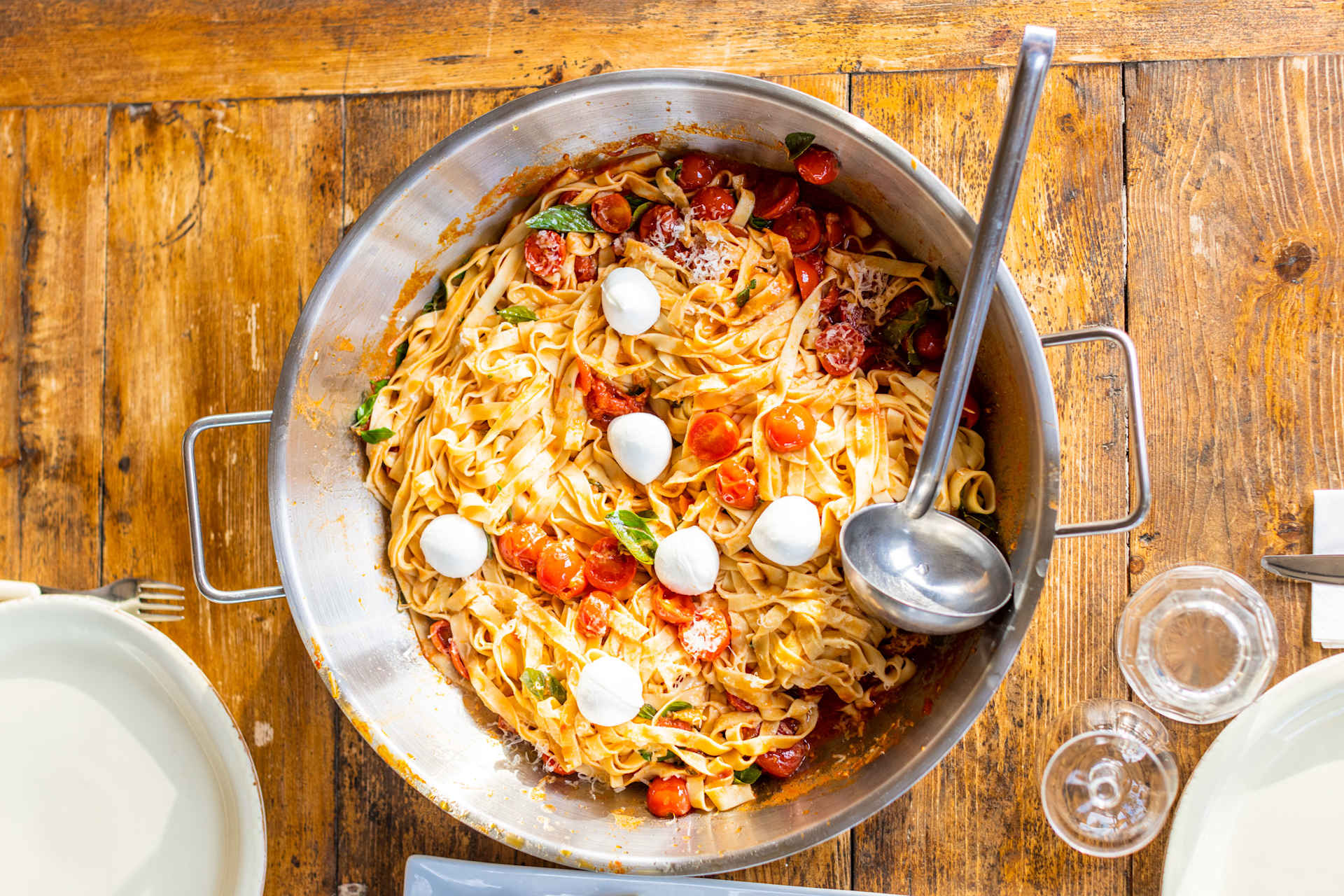
Most people choose based on one of four things, so start with whichever speaks loudest to you.
Food and wine. Emilia-Romagna holds one of the densest concentrations of famous products anywhere in the country and is the easiest region to eat your way across. Piedmont is the one for serious wine, with truffle season as the added draw. Sicily's kitchen is the least like the rest of Italy's. If you want the experiences rather than the map, the guide to things to do in Italy covers cooking lessons, mill visits and wine cellar tours by region.
Mountains. Trentino-Alto Adige has the Dolomites, some of the best-marked trails in the country and the widest range of difficulty. Valle d'Aosta is higher and more serious. Abruzzo is the wild option, with far fewer people on the paths.
Coast. Liguria and Campania are the dramatic ones and the busiest. Puglia and Sardinia give you more shoreline with less of everyone else on it, and Calabria has some of the emptiest beaches on the mainland.
Art and history. Tuscany, Lazio and Veneto hold the famous cities. Sicily and Basilicata carry deeper history with a fraction of the queue.
One region is enough for a week and two is the sensible maximum for ten days. Distances between regions look short on a map, but trains, transfers and mountain roads eat more of the day than you'd expect, so you'll usually see more by staying in one place than by moving. For the calendar side of it, the best time to visit Italy guide takes the year month by month.
Terrain varies more than the map suggests. Puglia and the Po plain are among the flattest ground in the country. The Dolomite valleys ride flat as well, because the paths follow valley floors and old rail beds while the mountains stay overhead. Tuscany, Umbria and Piedmont are hill country with real climbing, and the ridge roads between wine towns are steeper than photographs make them look. Sardinia's interior and the Amalfi paths are among the hardest ground in the country, the first for gradient and the second for stairs.
VBT | Country Walkers travels in ten of the twenty regions: Piedmont, Lombardy, Trentino-Alto Adige, Tuscany, Umbria, Campania, Puglia, Basilicata, Sicily and Sardinia. Some are ridden, some are walked, several are both, and E-bikes are available on every Italy bike tour. The full set of routes, dates and effort ratings sits on the Italy tours page.
If you're not sure what a rating means in practice, the activity levels guide explains how they're set and what a day looks like at each one.

Over 98% of guests tell us they plan to travel with VBT | Country Walkers again.