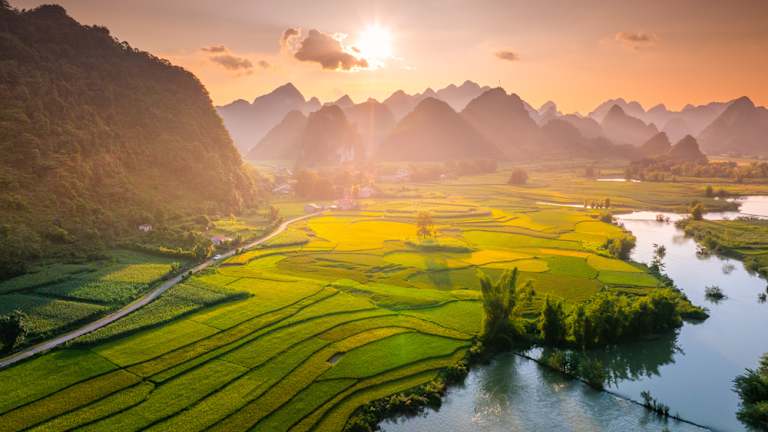
On this unique adventure, you’ll taste the rich spices of the Thar desert, the fruits of the Ranthambore jungle, and the delicate flavors of the Mughal cuisine—and meet the people who bring these unique flavors to life.
Published on April 28, 2026
By Molly Waldstein, Travel Writer
It’s tempting to think India as one homogenous culture, but in reality, it includes 10 distinct biogeographic zones, 22 officially recognized languages, and is the birthplace of four different religions. The palaces of Rajasthan bear little resemblance to the jungles of Maharashtra, the hills of Haryana, or the wetlands of Uttar Pradesh—and each landscape comes with its own fragrant cuisine, customs, and welcoming people. “Within India, there are so many differences,” explains Siya Bhalla, a close Indian friend who helped us design this trip. “There are many variations in the landscapes, cuisine, and culture—almost like the nations of Europe. In India, we have similar diversity across the entire subcontinent—so you really have to travel widely to truly understand it.” On this unique adventure, you’ll taste the rich spices of the Thar desert, the fruits of the Ranthambore jungle, and the delicate flavors of the Mughal cuisine—and meet the people who bring these unique flavors to life.
India is a spiritual nation—and the birthplace of Hinduism, Buddhism, Jainism and Sikhism, with Muslims, Christians, and others living side by side. In the capital of New Delhi, a remarkable visit to the Gurdwara Bangla Sahib Sikh temple gives us an in-depth perspective of one of India’s native spiritual traditions. “The Sikh religion is perhaps the most charitable in the world,” says Siya. “In this Sikh temple, they serve free food in their dining hall every day, and anyone can come in and eat. We’ll be able to visit the temple and see the dining hall—and maybe even watch the food being served.” Unlike Hindu temples, to which entrance is restricted by India’s complex caste system, the Sikh temple is open to everyone—and every day, community meals are served to all. “When you enter the Sikh temple, you really feel a wonderful sense of peace and compassion,” explains Siya. “It’s the perfect introduction to the spiritual life of India.” As you relax in this tranquil sanctuary, you’ll meet the local people and witness true Sikh compassion in action.
When it comes to Indian architecture, the ancient forts and palaces tend to get the most attention—but the cascading stairs and intricate carvings of their remarkable stepwells are not only architecturally stunning, they’re also a hub of community activity. Built with many levels of stairs in fascinating geometric patterns, stepwells descend deep into the earth—allowing locals to enjoy the cooler subterranean air while also providing access to water. “Most of Rajasthan is in the desert, so there isn’t much groundwater,” explains Siya. “The ancient rulers built these stepwells in the ground to store rainwater—they could be as much as 200 feet deep. Water shows wealth—so the stepwells are built with pride, and many are decorated with magnificent carvings.” Particularly in the hotter climates, stepwells are more than just a way to cool off and hydrate—they’re also an important social center where neighbors meet and catch up on the day’s events.
In the village of Rawla Narlai, we’ll visit a beautiful stepwell—hidden deep in the jungle and rarely seen by travelers. Far from the village lights, the Rawla Narlai stepwell is a magical monument to Indian resilience and social interaction. Here, the glow from thousands of candles illuminates the architectural beauty and spiritual impact of the jungle stepwell—and sets the perfect tone for a romantic candlelit dinner under the stars. “The stepwell is in the middle of the forest, so it’s very private,” explains Siya. “We have a sumptuous dinner here, lit by thousands of candles.” As you relax in the glow of the firelight, the sights, sounds, and flavors of the jungle bring the beauty of this magical place to life.
Moving on from the colorful gardens and frangipani trees of Rawla Narlai, our adventure moves into the Thar Desert. Here, guests on our October-March departures have the unique opportunity to stay in a travelling desert camp. “In the desert, nomadic tribes set up seasonal camps,” explains Siya. “They arrive in October and leave in March. The opportunity to stay overnight in the travelling camp is a rare and unique chance to experience the authentic life of India’s desert tribes up close.” (If you would rather not stay in the travelling camp, our April and September departures offer a resort hotel accommodation instead—so choose your departure date with that in mind!)
Regardless of whether you choose a tent camp departure or a resort hotel departure, get ready for an eye-opening adventure into India’s desert culture. “All our guests will have the opportunity to do jeep safaris in the desert,” explains Siya. “This is a completely different landscape than the regions around Udaipur and Rawla Narlai. Here, you’ll see a vast expanse of sand dunes with unique desert plants and animals—and of course a crystal-clear night sky bejeweled with stars.” With two separate desert safaris planned, you’ll experience the desert waking up in the clear morning at sunrise—and again as the rays of the setting sun illuminate the desert’s vibrant evening colors. You may enjoy spotting the rich local bird life—including wild peacocks, silvery demoiselle cranes, and bold steppe eagles.
In the bustling Pink City of Jaipur, rickshaws are a way of life. Traditionally run by men, a rickshaw, or tuk tuk, is typically a large tricycle or a three-wheeled car. “One of the most innovative things we’ll experience in Jaipur is a ride in an electric rickshaw owned and run exclusively by women,” explains Siya. “Pink City Tuk Tuk provides these women with a level of financial and social independence that is really quite unusual.” This is a rare opportunity to meet local female entrepreneurs and learn what it takes to be successful in this historically male-dominated society.
Another side of the Pink City reveals itself when you visit a well-to-do Rajasthani family for a meal in their home. Here, you’ll learn some of the coveted culinary techniques that have been passed down through generations. “This is a great opportunity to learn how to prepare authentic Indian dishes,” says Siya. “Here, we’re invited into the home of a noble family from the upper levels of the caste system. It’s a great way to see another side of the colorful tapestry of Indian society.” As your new Indian friends welcome you into their charming home, they’re delighted to chat with you about daily life in Jaipur.
The jungles of Ranthambore National Park are teeming with wildlife. Here, you’ll find chattering Hanuman langurs and vibrant kingfishers darting among the ruins of ancient fortresses—now reclaimed by the lush green tendrils of the jungle. You’re in the tiger’s territory now. “Ranthambore is known for its tigers—but they are an elusive cat,” explains Siya. “We will have two opportunities to seek out the tiger. And what I always tell people is—even if you don’t see the tiger, be assured, the tiger sees you.” With two planned safari excursions in Ranthambore, you’ll witness the jungle coming to life with a wealth of birds, monkeys, antelopes, and amphibians to spot—and always the strong chance of seeing tigers in their natural habitat. As to whether you are lucky enough to see a tiger—well, that’s the tiger’s choice.
Tiger poaching has been a huge challenge in this part of India—and many local families have survived for generations by poaching tigers. “The local people have traditionally earned money through tiger poaching,” explains Siya. “They don’t always even know it’s against the law.” Here, we’ll meet a close friend of Siya’s who runs an organization that partners with the Indian government to support tiger conservation. “Tiger poachers are often the family breadwinners in Ranthambore, so when they get arrested and jailed, their families are left struggling to make ends meet,” explains Siya. “This organization supports the family members who are left behind—offering them resources and education, as well as ways to earn money without relying on tiger poaching.” Old habits are hard to change—and support for local communities who are transitioning away from earning money through poaching is truly essential for the long-term preservation of these majestic big cats.
Of course, no visit to India could possibly be complete without a visit to the Taj Mahal in Agra. Here, we’ll stay in a delightful local hotel featuring distant views of the great Mughal monument to love. On a clear day, you can just make out the white minarets in the distance—a perfect pre-cursor to your detailed visit.
You can choose to end your adventure in Agra—but for those interested in discovering the complex spiritual tapestry of India, our optional Varanasi Extra Experience is simply not to be missed. “Varanasi is the spiritual home of India,” says Siya. “It is the legendary birthplace of both Hinduism and Buddhism—here on the shores of the holy river Ganges. The Hindus believe the river itself is the hair that flows from the head of Lord Shiva—the most powerful Hindu deity. It truly is a holy place.” In Varanasi, you’ll find the confluence of Indian spiritual traditions in a chaotic patchwork of temples and rituals, flowers and songs, sacred cows and yogis. “Nothing brings the Ganges to life like a sunrise cruise,” says Siya. “Our cruise is unique in that we’ve included a live performance of traditional Indian music. Later on, we’ll see a Kathak dance performance and meet a dance guru who has been here for generations.” The famous American writer, Mark Twain, once described Varanasi as "older than history, older than tradition, older even than legend, and looks twice as old as all of them put together." To fully appreciate the vibrant, complex, and lustrous tapestry of India’s cultural and spiritual life, this Varanasi Extra Experience is essential.



Over 98% of guests tell us they plan to travel with VBT | Country Walkers again.