Your last ride of the season is the perfect time to take some extra care of your bike—cleaning off dirt and grime before putting it to bed for the colder months.
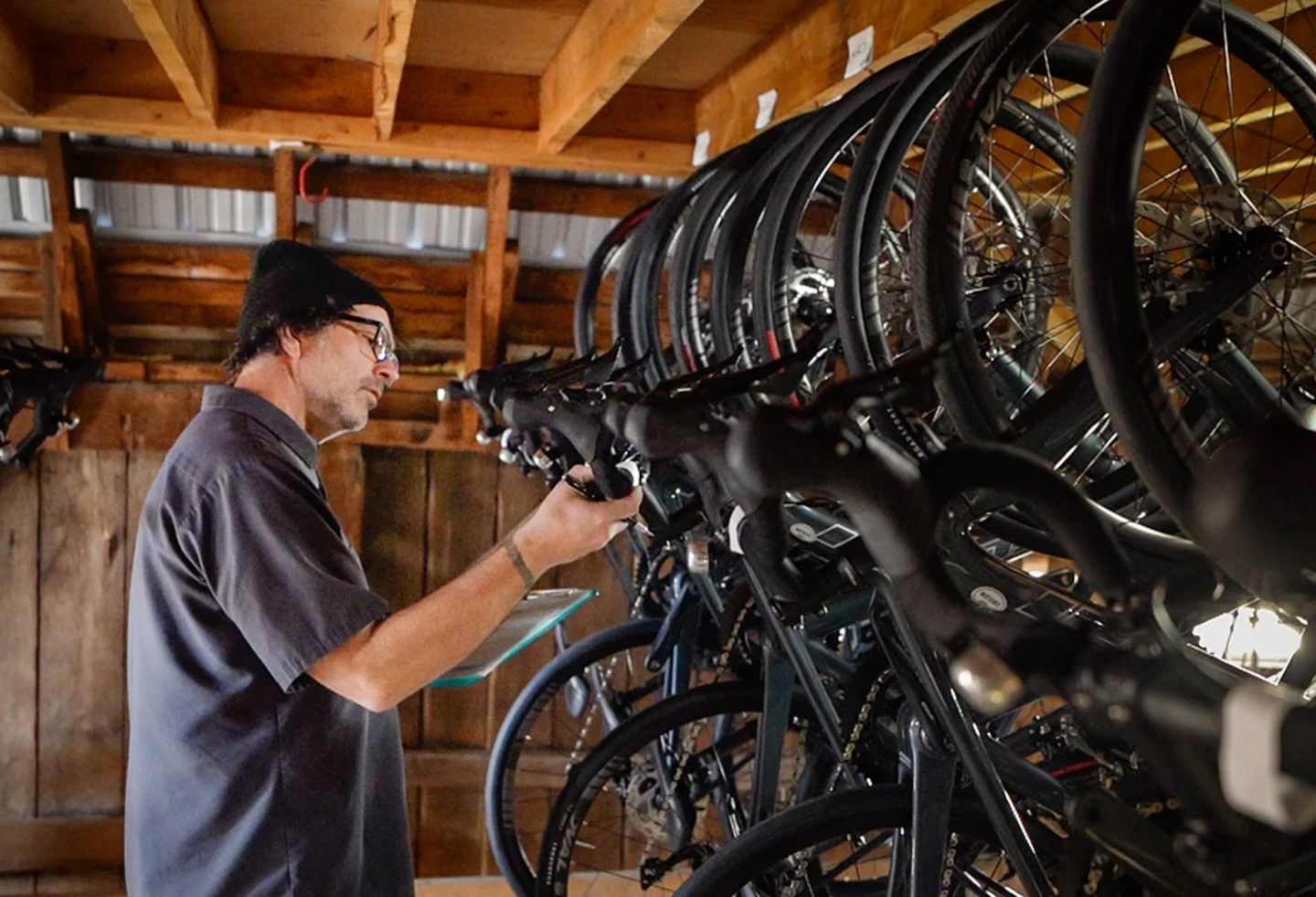
Your last ride of the season is the perfect time to take some extra care of your bike—cleaning off dirt and grime before putting it to bed for the colder months.
Published on November 11, 2025
By Molly Waldstein, Travel Writer
If you live in a colder climate, the end of autumn’s glorious fall foliage is a sign that, for many of us, it’s time to tuck our bikes safely away for the winter. If you’re not sure exactly how to do that, VBT’s veteran Field Operations Manager and bike mechanic extraordinaire, David Drumm, has some excellent pro tips.
Your last ride of the season is the perfect time to take some extra care of your bike—cleaning off dirt and grime before putting it to bed for the colder months. “The one thing that’s most important is when you’re done riding for the season is to clean, clean, clean,” explains David. “Clean it from top to bottom—because the dirt that’s on it can harden over time and stain the paint. It can even solidify to the point where it’s basically never coming off—no matter how hard you scrub. To keep your bike looking and performing its best next spring, give it a good bath before putting it away for the season.” An ounce of prevention is worth a pound of cure, as the old saying goes! Here are David’s seven easy steps for top-notch end-of-season bike cleaning and storage.
The first step to cleaning up your bike for the season is to degrease the drivetrain with a good bike-approved degreasing agent. “If you’re not sure what to get, your local bike shop is your best resource,” says David. “They will have a range of options—often including eco-friendly degreasers that are easy on the environment.” Start by spraying a generous amount of a bike-safe degreaser on all drivetrain components—then let it rest for a few minutes to let the degreaser do its work.
While you’re waiting for the degreasing agent to take effect, this is the perfect time to fill a bucket with warm water and a few splashes of high-quality dish soap. “Not all dish soaps are made equal,” cautions David. “Make sure you’re getting a good quality dish soap. Poor quality soap won’t separate the grease from the frame as well, and your bike could end up with a bit of grease and grime still stuck to it—even after you’re done cleaning.” Once the degreaser has broken down the oil and dislodged it from drivetrain, a good wash with a dish soap and water solution will ensure it doesn’t get stuck back on the paint. Give the whole bike a good bath in warm soapy water, then rinse it clear of all that built-up grime.
After rinsing, pat down the bike with a clean cloth to dry the components. “I always like to use this time to really inspect the bike while I dry it,” explains David. “I get a sense of any cables or housing that might need replacing, or brake pads that are wearing thin.” If you see something that looks a little off, the winter is actually the perfect time to take it to the bike shop! Particularly in a northern climate, the winter is a slow time for most bike shops—so they are often more available, and you might even find the prices to be lower during the off season.
Now that you’ve cleaned away the old grease and dirt, it’s equally important to protect its components from winter’s damp and cold—ensuring your trusty bike is in top condition when the warm weather comes. “Find yourself a good wax-based bicycle lubricant,” advises David. “If you’re not exactly sure what to get, your local bike shop is a great place to start. They will likely have a range of products available and can help you choose the best one for your specific bike and climate.” Applying a layer of fresh clean lubricant will help keep your bike’s components limber and fit through the winter.
Another one of David’s great tips is to get a can of good old fashion WD40—an oil that helps deter rust. “At the end of the season, I always recommend spraying a tiny spot of WD40 on all the bike’s bolt heads,” explains David. “It will actually push out any water that might be inside those components—which helps prevent rusting and adds a nice little protective film to keep everything in good working order over the winter.” A little dab of WD40 on seat post clamps, quick releases, and headset bolts will ensure your bike’s components keep from locking up during the inactive season.
Pumping tires is something most riders do often—but did you know you should also pump your tires before storing the bike for winter? “Check the side wall of your tire to find its maximum air pressure,” explains David. “Then fill the tires so they’re just a little bit below it. This keeps the tires round and healthy for longer during storage.” As your bike rests in its winter storage spot, the tires will naturally lose air over time. If the bike is standing on its tires during this time, that can mean that flat spots in the tires gradually develop—and believe it or not, those flat spots can actually persist even after winter is over. “Once you get flat spots in your tires, they tend to stick around,” says David. “The best way to prevent this is to air up the tires fully before putting the bike in storage. And if you can avoid leaving the bike on the ground, that’s a huge help as well.”
While not every living situation makes it possible to hang a bike, if you have the space, hanging your bike on hooks is the best way to avoid flat tires, or wheel flattening, during the months of winter inactivity. “You can typically pick up inexpensive bike hooks at your local bike shop or hardware store,” says David. “Choose a spot to hang your bike that’s cool and dry. Don’t hang it next to a heat source (like a furnace) because that will cause the tires to dry out and crack.” If you aren’t able to find a spot to hang your bike, it’s OK to leave the bike standing for the season—but it’s a good idea to rotate and pump the tires periodically to prevent flats.
Storing the bike upside down on its handlebars is another option—although it’s not one that David recommends. “If you store the bike upside down with the weight on the handlebars, that can cause real problems,” says David. “It will preserve the tire shape, true, but it can introduce other challenges—including damage to the handlebars and saddle. Hanging the bike is really the best thing you can do to preserve the bike’s integrity in storage.”
If you happen to have an E-bike, there’s one final step that is critically important to follow before putting your beloved machine to bed for the winter—take care of the battery! “Especially if you live in a cold climate, it’s really important to store your E-bike battery in a warm, dry spot for the winter,” David explains. “Make sure the battery charge is between 30% and 50% full. A fully charged battery shouldn’t be stored, nor should a fully depleted battery. The battery is a rather expensive component, so it pays to take a little extra care to store it properly.” You never want to subject your battery to extreme temperatures—so finding a dry, warm place to store your partially-charged battery for the season is essential.
For an extra layer of E-bike protection, apply a thin layer of dielectric grease on the bike’s battery connections. This is a great way to protect it from corrosion over the winter and ensure it’s ready to roll once the spring weather beckons you to explore the world on two wheels.
If all this sounds like a lot of work, don’t despair! Your local bike shop is always a great resource for keeping your bike in tip-top shape—and they can easily help you clean and prep your bike for end-of-season storage. Local bike shops often slow down in volume over the winter months—and especially if you have a concern about your bike, or a component that you want tuned up or replaced, the winter months are the perfect time to bring in the bike to the shop. The turn-around times are usually faster, and your bike is sure to get plenty of attention—and best of all, it will be ready for you to enjoy once the warmer weather comes.



Over 98% of guests tell us they plan to travel with VBT | Country Walkers again.